One campervan, two families: $4,450 a year each, and where it parks
A used campervan costs about $8,900 a year parked. The math on two families splitting one, where it lives, and the weekend budget that keeps the peace.
The AllDibs team
5 min read
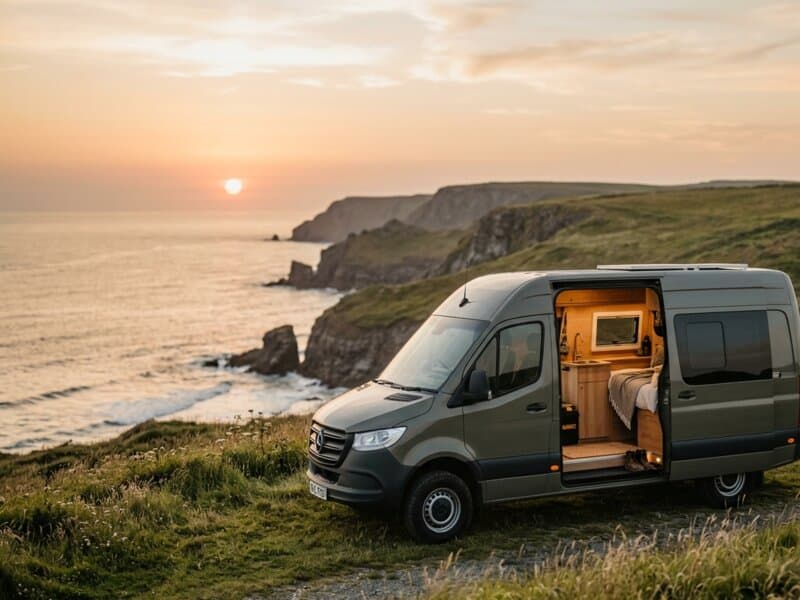
A campervan is bought for a picture: the van parked above a beach at sunset, side door open, kettle on. The picture is real, and it happens perhaps six weekends a year. The other forty-six weekends the van is parked somewhere it does not quite fit, costing money by the month.
That gap between the picture and the parking is why a campervan is such a good thing for two families to own together, and why the arrangement needs more thought than a shared mower. Here is the arithmetic, then the two problems the arithmetic does not solve: where the van lives, and who gets the long weekends.
What a campervan costs a year, parked
Take a six-year-old converted high-roof van bought for $48,000: a bed, a small kitchen, a heater, no bathroom. Ordinary, well used, and the sort of van that gets kept for years. Here is what it costs before it goes anywhere.
| Annual line item | Cost |
|---|---|
| Depreciation, about 8% a year | $3,840 |
| Insurance | $1,100 |
| Covered storage, off-site, $150 a month | $1,800 |
| Servicing, tires, brakes | $1,200 |
| Living-space upkeep: battery, water pump, seals, propane | $600 |
| Registration and roadside cover | $360 |
| Total | $8,900 |
Now the honest count. Most owners, asked how many nights they slept in the van last year, land somewhere between twelve and twenty-five. Call it eighteen. If your number is different, swap it in; the sums work the same way.
- Cost per year
- $8,900Cost per year
- Nights actually slept in it
- 18Nights actually slept in it
- Cost per night away
- $494Cost per night away
$494 a night for a bed you own. The reason to count it is that nearly all of the cost is in the van existing, so almost none of it grows when a second family starts using it.
Now divide by two
Two families, same van, same $8,900 a year, split evenly: $4,450 each. And as with a boat or a cabin, the second family does not take half the nights. Eighteen nights was never the van's limit; it was the limit of one household's school calendar and annual leave. Two households with different calendars can each get 26 nights, and the van still sits parked more than 300 nights a year.
| Owning it alone | Split two ways | |
|---|---|---|
| Your cost per year | $8,900 | $4,450 |
| Nights you get | 18 | 26 |
| Your cost per night away | $494 | $171 |
| Someone else empties the grey tank | No | Half the time |
Before you buy, do one more check. Look up a comparable van on a peer-to-peer rental site for your area and add the fees, the mileage charge and the insurance to the nightly rate. If that figure comes out near $171, sharing has not earned its keep yet, so rent for another season. If it comes out well above, and for anything with a proper bed and a heater it usually does, keep reading.
The storage problem is the first decision, not the last
A high-roof van is taller than most garage doors. So it lives on a driveway or in a paid space, and both have a catch. Plenty of homeowner associations and some city bylaws restrict campers parked on driveways, so read yours before the deposit, not after. The paid space, at around $150 a month, is the third-largest line in the table.
The bigger catch is not money. Whoever's driveway the van sits on becomes the owner in every way that matters day to day. They notice the damp patch. They plug in the battery tender. They field the neighbor who does not like looking at it. Within a year the other family feels like they are renting, and the driveway family feels taken for granted. Both are a little right.
The weekend budget that makes it work
Two families sounds easy to schedule, and everyone says the same thing at the start: we will just alternate. Alternating fails within a year, for a reason that is obvious once said. Weekends in general are not scarce. About eight specific ones are: the long weekends, the school breaks, the two summer weeks, the one October weekend when the trees turn. Alternate by month and one family gets all of July. Alternate by weekend and you spend Sunday evenings trading.
The fix is the same one that works for a boat split four ways: treat days as currency and price the scarce ones separately. Each family holds a budget of weekend credits and a bigger budget of midweek credits. Booking a night spends a credit; once the night has passed, the credit comes back. Nobody can hold the whole summer at once, both families can plan months out, and when a request has to be refused it is the calendar refusing it, not your friends.
For two families the budget can be small. Four weekend credits and ten midweek credits each means neither family can have more than four weekends claimed at any moment, which is enough to book a trip and the one after it, and not enough to fence off a season. Adjust the numbers; the shape is what matters.
Write these six things down
Before the first trip, while both households are still excited. Not necessarily a lawyer's document, but a page both families signed.
- Whose name is on the title and the insurance, and how the other family's half is recorded. The simplest answer is a written note of the split, the purchase price and the date.
- The monthly contribution and the shared account. About $370 each on the numbers above, into an account that pays the storage, the insurance and the servicing without a conversation.
- The storage arrangement and its price, decided the way the callout above says.
- The repair threshold. Anything under, say, $250 comes from the shared account without asking. Anything above needs both families to say yes.
- The condition rules: returned with fuel above half, the water tank empty, the fridge cleared, the bedding washed, and a stated consequence everyone agreed to in advance.
- The exit clause. With two families, one leaving is the end of the share, so agree now how the van is valued and who has first right to buy the other half. This is the clause you will be most grateful for.
The same shape works for a cabin, where the scarce inventory is holiday weeks rather than long weekends, and our guide to sharing a cabin goes into the family version. If you want to sanity-check the purchase first, run it through cost per use. And once the only question left is whose weekend it is, that is the question AllDibs was built to answer.