Four families, one boat, and $7,875 a year each
A modest used boat costs about $10,500 a year whether it leaves the dock or not. Here's the line-by-line math on splitting one four ways, and the five things to write down first.
The AllDibs team
4 min read
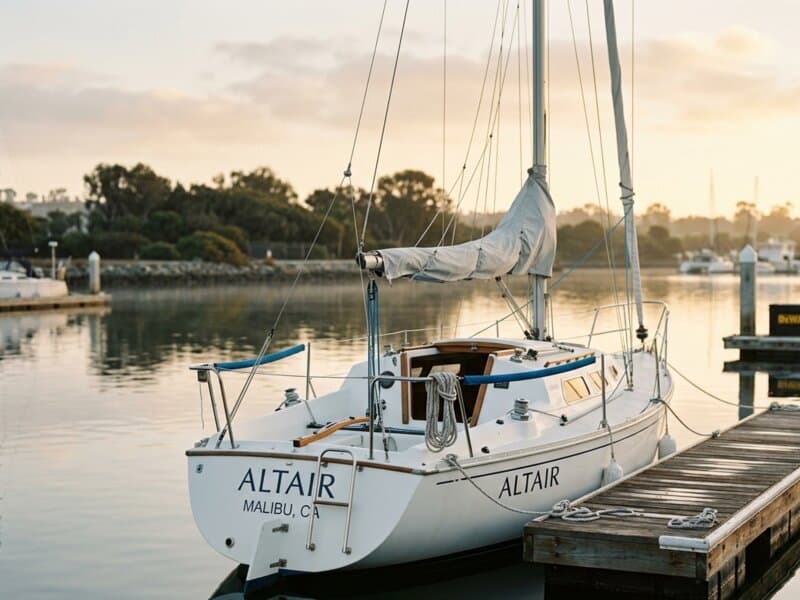
The old joke is that a boat is a hole in the water you throw money into. The joke is funny because the money is not really spent on boating. It is spent on the boat existing. Slip fees, insurance, winter storage and depreciation all bill you identically whether you went out thirty times last year or twice.
Which makes a boat the clearest case in the world for splitting something four ways. Here is what the arithmetic actually looks like.
What a boat costs a year before anyone unties it
Take a used 21-foot bowrider bought for $32,000, nothing exotic, the kind of thing a family buys and keeps for a decade.
| Annual line item | Cost |
|---|---|
| Depreciation, about 7.5% a year | $2,400 |
| Slip or mooring | $3,600 |
| Insurance | $700 |
| Winter storage and shrink wrap | $900 |
| Servicing: oil, impeller, prop, hull | $1,500 |
| Registration, safety gear, cleaning | $200 |
| Fuel for a typical season | $1,200 |
| Total | $10,500 |
Now the number that stings. Most owners, if they count honestly, get the boat out somewhere between ten and twenty days a year. Call it fourteen, or swap in your own number; the arithmetic below works the same way.
- Cost per year
- $10,500Cost per year
- Days actually used
- 14Days actually used
- Cost per day on the water
- $750Cost per day on the water
$750 a day. You could charter a similar boat with a captain for that, and someone else would wash it.
Now divide by four
Four families, same boat, same $10,500 of annual cost, split evenly: $2,625 each. And here is the part that surprises people: each family does not get a quarter of the fun. Fourteen days of use was never a limit imposed by the calendar; it was a limit imposed by real life, weather and work. Spread across four families, the boat can comfortably support eighteen days each and still sit idle most of the season.
| Owning it alone | Split four ways | |
|---|---|---|
| Your cost per year | $10,500 | $2,625 |
| Days you get | 14 | 18 |
| Your cost per day used | $750 | $146 |
| Someone else winterizes it | No | Sometimes |
The three things that break a shared boat
Co-ownership fails often enough that it has a reputation. In our experience it is never the purchase that goes wrong; it is the year three of living with it.
Money drift. One family pays for the unexpected $1,400 outdrive repair and quietly resents it for two seasons. Weekend capture. One family books every good Saturday in July because they are simply the most organized, and everyone else stops asking. The small stuff. Fuel left at a quarter tank, sand in the bilge, the cooler nobody emptied. None of these are about money, and all of them end friendships.
Write these five things down
Not a lawyer's document, necessarily, but five decisions made while everyone is still enthusiastic, rather than in the middle of a repair bill.
- Who pays what, and when. A shared account with equal monthly contributions beats settling up after every invoice.
- The repair threshold. Anything under, say, $300 comes out of the shared account without a conversation. Anything over needs a group yes.
- How days get allocated, specifically for weekends and holidays, which are the only genuinely scarce inventory.
- The condition rules: returned fueled, rinsed, and empty, with a stated consequence that everyone agreed to in advance.
- The exit clause. How someone leaves, how their share is valued, and who has first right to buy it. This is the clause you will be most grateful for.
Those five are the headlines. We have since written out the long version as a printable boat partnership agreement checklist, 45 lines to tick off around a table. It is not legal advice, but it should make the hour with a lawyer shorter.
Why weekends need their own budget
Notice that three of the five are about scheduling, not money. That matches what we see: the financial split is the easy half. A shared calendar where anyone can book anything is not a solution. It is a race, and the winner is whoever checks their phone most often.
The fix is to treat days as currency and price the scarce ones separately. Give each family a budget of weekend days and a larger budget of midweek days. Booking spends a credit; once the day passes, the credit comes back. Nobody can claim all of August, everybody can plan ahead, and the calendar, not a person, is what says no. That is exactly how AllDibs works.
The same math applies to anything with fixed annual costs and occasional use: a cabin, a campervan, a trailer, a tractor. If you want to run the numbers on something smaller first, start with cost per use. If it is a family property, we wrote a guide for shared cabins, and worked the numbers through for three siblings sharing one lake house.